Showing posts with label food. Show all posts

15 August 2010

American Farmers Benefit from Drought and Fires in Russia

The amazing wild fires in Russia, that have encircled Moscow, shutting it down with smoke, soot, and ash, have also devastated the wheat harvest this year, causing Russia to suspend all exports of wheat and other grains. Ravaging drought in the rest of Europe, drought in Australia, where locusts are also destroying fields of grain, producing dramatically curtailed harvests , has proven a bonanza to American wheat farmers who are seeing undreamed of prices for wheat. At about $7 a bushel, the sharp spike in wheat futures will undoubtedly lead to a sharp spike in over all food prices globally, leading to shortages, increased hunger, and in some places outright famine and food riots. Are you ready for what's coming?


Wheat is the new gold in time of plenty for America’s breadbasket

As fires wreck Russia's harvests and poor countries brace for shortages, it's boom time for Kansas farmers.
By David Usborne

Strong wheat yields in Kansas and Colorado this year have been boosted by the crop trading for $7 a bushel on futures markets

Wildfires, floods, crippling droughts, and even a threatened plague of locusts have wrecked crops and ruined harvests around the world, raising fears of global food inflation shortage and food riots.
But as they hose off the dust and chaff caked on their exhausted combine harvesters, farmers in America's plain states are adjusting to something possibly wonderful: a combination of unusually good wheat yields and suddenly soaring prices – thanks to disastrous circumstances elsewhere – has put them at the centre of a gold rush.
"It feels like Christmas in August," admitted Darrell Hanavan, of the Colorado Wheat Administrative Committee, noting that the harvest just completed in his state seems to have been the most bountiful for 25 years. More importantly, the dollar value for the crop is almost sure to set a record.
The thin soil of the plains is not always so kind. Scorching drought and relentless rains are frequent visitors to the breadbasket of America. So it is startling for some to find themselves singled out for good fortune, while the rest of the US combats an unemployment rate that refuses to come down.
Russia announced that weeks of fierce heat and uncontrolled fires would cost the country a quarter of its crop and that its wheat exports, which will be frozen from tomorrow, may not resume until next year. Output in Ukraine and Kazakhstan has slumped too. Canadian wheat farmers have been struggling with crops drowned by rains that won't stop, and in eastern Australia, the wheat crop could be devastated by a plague of locusts expected to start hatching next week.
Egypt, the world's biggest wheat importer, and Indonesia and Thailand, which also both rely on imports of grain, complained this week that they face a sudden price squeeze on such staples as bread, pork and sugar and with that, the risk of social unrest of the kind witnessed in 2008, when food price hikes provoked riots in a number of countries.
Abdolreza Abbassian, a senior economist with the UN's Food and Agriculture Organisation (FAO) in Rome, said Morocco, Libya, Tunisia and Iran all face higher budget deficits because of the amounts they spend on bread subsidies. "Some are politically unstable countries – they simply cannot afford" the social effects that bread queues could have on the urban poor.
Whether the risk abates could depend on farmers in the American Midwest and whether they decide to cash in by planting more wheat, the world's most consumed cereal. The rosy outlook for them was confirmed by the US Department of Agriculture (USDA). It expects US exports to surge by 36 per cent this year.
"Crop revenues look to be much improved, with record crops and generally higher prices than we anticipated earlier this year," Joseph Glauber, the USDA's chief economist said.
"The US is an island of supply in a year of very big demand," noted Daniel W Basse of AgResource, a Chicago commodity-forecasting concern. The US Agriculture Secretary, Tom Vilsack, added: "There is no question this is an opportunity for us and we're going to take advantage of it."
Farmers everywhere are notoriously slow to pop the champagne, however. Even now, some, such as Daryl Larson, who farms 1,500 acres in Kansas with his brother, can't entirely shed their natural caution. "I guess maybe farming makes that happen to you," he suggests with a chuckle. "Nothing is for certain."
He knows, for instance, that while the futures prices of wheat on the Chicago commodities exchanges are spiking at heights that even a few weeks ago would have seemed mad –above $7 (£4.50) a bushel in recent days – the cash he receives from selling now is considerably more modest.
Moreover, it is no secret to Mr Larson that speculators who have rushed to buy wheat in the wake of Russia's export ban may have created a bubble that is not immune from bursting. After finishing his harvest in June, Mr Larson, 56, sold nearly half of his wheat crop but will keep the rest in the silo in the expectation that the prices will at least climb further if not astronomically. "I am expecting the export business will pick up in the next few weeks because the rest of the world does not have a whole lot of wheat to export. If that is correct, we should see new strength in our exports."
Most analysts would concur with Mr Larson's strategy of holding on to some grain for added profit but not expecting the world. American farmers will, more than likely, increase their wheat acreages when planting time comes in the next few weeks.
"It's hard for me to imagine that we won't see some increase in wheat acreage," said John Anderson, an economist with the American Farm Bureau Federation. "Wheat prices are certainly at a level historically that would look very attractive." The pressure put on pricing by the speculators could, of course, always backfire on them. But for now at least, the upwards pressure on wheat prices is rubbing off nicely on other crops grown in the US.
Mr Larson is preparing to harvest his fields of soy bean and sorghum, crops for which the market has also been strengthening. Because wheat is also produced in parts of the world, for instance the Ukraine, for cattle feed, a similar effect is being felt for another crop that is huge in US: corn (or what the British call maize).
So surely this is one of those unusual times when farmers in the US at least can afford to admit to some joy. Did Mr Larson at least skip a little when he saw the news about Russia moving to suspend exports of wheat? Mr Larson, who has been working his farm since the day he graduated from high school in 1972, wouldn't say that exactly, but it did cheer him. "We've had better. And we have a lot worse."
Enhanced by Zemanta

02 May 2010

The Battle for Raw Milk


T
he article below is about a government police raid in the middle of the night - not on a drug den or a terrorist cell- but on a peaceful Amish family's farm. The reason: the suspicion that raw milk from that farm had crossed interstate lines. As you read you will see numerous violations of Constitutional rights not to mention the basic violation of a family's right to be at peace. At the root of it is the devil's desire that no human being have access to the pure good food that God intended Man to live on. So, like it or not, the Raw Milk Movement had better go on a war footing to protect our right to eat God's pure good food.


Raw Milk Crackdown

“They came in the dark, shining bright flashlights while my family was asleep, keeping me from milking my cows, from my family, from breakfast with my family and from our morning devotions, and alarming my children enough so that the first question they asked my wife was, ‘Is Daddy going to jail?’”

That’s how Amish farmer Dan Allgyer described an early morning visit last week from two FDA agents, two U.S. Marshals, and a Pennsylvania state trooper. Apparently, investigating a single farmer for possibly trafficking raw milk across state lines requires a show of force.

“I became aware of the cars as soon as I walked out on the sidewalk as part of my morning routine around 4:30 a.m. and immediately said to myself something is going on,” Allgyer wrote in a statement for the National Independent Consumers and Farmers Association. “I was watching and noticed three cars were cruising down right behind each other, and immediately thought, hey, that looks like trouble. I watched and pretty soon one car came back and parked on my neighbor’s farm, on private property.”

After tooling around, the cars showed up Allgyer’s property. “They all got out of their vehicles – five men all together–with big bright flashlights they were shining all around. My wife and family were still asleep. When they couldn’t find anybody, they prepared to knock on the door of my darkened house. Just before they got to the house I stepped out of the barn and hollered at them, then they came up to me and introduced themselves.”

Without telling him what is was, one of the agents handed Allgyer an FDA warrant that allowed the agents to inspect Allgyer’s farm. The warrant read: “You are authorized to take all necessary actions, including, but not limited to, the use of reasonable force, to effectuate entry to the above-named premises, the land and buildings located there, at reasonable times during ordinary business hours and to remain thereon to inspect within reasonable limits and in a reasonable manner all portions” of Allgyer’s farm.

Allgyer isn’t the criminal that the FDA is making him out to be. “When Americans first began pasteurizing milk at the turn of the last century, testing was rudimentary and farms were far less hygienic,” Katherine Mangu-Ward wrote in February, the first time inspectors showed up to raid Allgyer’s farm. “Today, the situation is different. Testing for the presence of such pathogens is much more precise, and farms are far cleaner. While processing milk remains a good choice for milk shipped to the population as a whole, there are a group of food rebels who would rather drink their milk straight from the cow.”

When Allgyer asked why the agents wanted to inspect his farm, FDA investigator Joshua C. Shafer said, “We have credible evidence that you are involved in interstate commerce.”

“I went to go talk to my wife,” Allgyer said in his statement. “As I walked away, they held a quick excited conversation and I heard one of them say, ‘I’ll take care of him.’ At that point, apparently, they had designated one of the marshals to stick close to me and dog my footsteps. He followed me as I walked toward the house. I went in the house quickly and told my wife a few words to let her know the situation, then immediately came back out of the house before the marshal had time to follow me in. When I came back out, they were inspecting all the coolers sitting out. They spent about a half hour digging through the packed coolers filled with milk and other food – all private property – taking pictures.”

After watching the agents root through his barn, open his freezers, and dig through his dumpster, Allgyer set about milking the cows, hours behind schedule.

“When I was just about done milking, Schafer and the other agent came in the barn and wanted me to answer some more questions. I told them I would not. The second agent said, ‘Are you gong to deliver those coolers to Bethesda and Bowie Maryland?’ I just looked at him. Then Schafer made a gesture and said, ‘The stickers with those towns names are on the coolers,’ as through to say, you might as well tell me.”

Allgyer refused to say anything and the agents left. Several days later, Allgyer received a letter from the Food and Drug Administration that read, “An investigation by the u.s. Food and Drug Administration has determined that you are causing to be delivered into interstate commerce, selling, or otherwise distributing raw milk in final package form for human consumption.”

The letter does not list the evidence against Allgyer, nor does it name specific violations. In fact, the letter from the FDA says exactly the opposite: “This letter is not intended to provide an all-inclusive list of violations.” Two paragraphs later, the letter instructs Allgyer to report within 15 days “the specific steps you have taken to correct the noted violations.”

“Failure to make prompt corrections could result in regulatory action without further notice. Possible actions include seizure and injunction.”

Read more: http://dailycaller.com/2010/04/26/raw-milk-crackdown/#ixzz0mmZzLp4W

16 April 2010

Mommy Goes Shopping

When you go shopping do you actually know what you are buying?
You might think you know - cause you always read the label - but the reality is you actually can't know! You are just hoping that what you are buying is the good wholesome food that you know you need.
The Food and Drug Administration (FDA) does not require full labelling on food. You are probably eating genetically engineered food and don't realize it because no labelling is required.
Here's a tip that will help a little: never buy anything that has a label, a list of ingredients, comes in a package, has a pretty picture, makes health claims and is advertised on TV.
Real food is not a manufactured product. Real food is a Creation of God.
The best tip: Grow your own.
Second best tip: Buy food from people who grow it (farmers) not from corporations that are 'artificial persons' who do not have to eat food. Corporations are only interested in profits, not human nutrition.
Enjoy. Learn. Share.

13 March 2010

The Science of Food Addiction


Here is a very good article to help us understand how refined, processed and fast food products - junk food- is designed with you in mind...
er, with your mind in mind, I should say.
This lets us know that we should not be buying our food from non-human corporations who conspire against human beings for the sake of a profit.
Food should be a strictly human affair. No corporations allowed.
Otherwise things get out of hand like they have gotten out of hand.
These 'foods' are engineered to addict you, to change the wiring in your brain so you are no more in control of yourself than a crack addict.
You can't blame the corporations - they're not human!
They have been set up to limit the liability of the humans involved- You need that kind of protection when you intend to engage in criminal activity.
Good Solution: Buy your food from other humans like yourself - farmers, fisherman, gardeners - people like yourself, who live and breathe. Not from faceless 'artificial persons' which is the legal definition of a corporation. Best Solution: Grow your own food, be like God and plant a garden.
Enjoy. Learn. Share.

Obesity: The killer combination of salt, fat and sugar

Our favourite foods are making us fat, yet we can't resist, because eating them is changing our minds as well as bodies

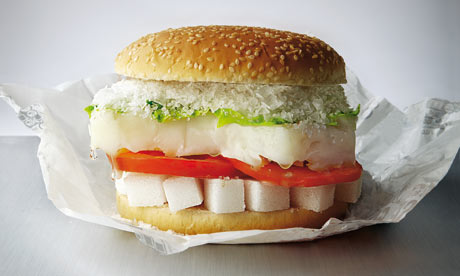
burger

'You get hungry, you want something, you end up picking up a hamburger.' Photograph: Johanna Parkin

For years I wondered why I was fat. I lost weight, gained it back, and lost it again – over and over and over. I owned suits in every size. As a former commissioner of the FDA (the US Food and Drug Administration), surely I should have the answer to my problems. Yet food held remarkable sway over my behaviour.

The latest science seemed to suggest being overweight was my destiny. I was fat because my body's "thermostat" was set high. If I lost weight, my body would try to get it back, slowing down my metabolism till I returned to my predetermined set point.

But this theory didn't explain why so many people, in the US and UK in particular, were getting significantly fatter. For thousands of years, human body weight had stayed remarkably stable. Millions of calories passed through our bodies, yet with rare exceptions our weight neither rose nor fell. A perfect biological system seemed to be at work. Then, in the 80s, something changed.

Three decades ago, fewer than one Briton in 10 was obese. One in four is today. It is projected that by 2050, Britain could be a "mainly obese society". Similar, and even more pronounced, changes were taking place in the US, where researchers found that not only were Americans entering their adult years at a significantly higher weight but, while on average everyone was getting heavier, the heaviest people were gaining disproportionately more weight than others. The spread between those at the upper end of the weight curve and those at the lower end was widening. Overweight people were becoming more overweight.

What had happened to add so many millions of pounds to so many millions of people? Certainly food had become more readily available, with larger portion sizes, more chain restaurants and a culture that promotes out-of-home eating. But having food available doesn't mean we have to eat it. What has been driving us to overeat?

It is certainly not a want born of fear of food shortages. Nor is it a want rooted in hunger or the love of exceptional food. We know, too, that overeating is not the sole province of those who are overweight. Even people who remain slim often feel embattled by their drive for food. It takes serious restraint to resist an almost overpowering urge to eat. Yet many, including doctors and healthcare professionals, still think that weight gainers merely lack willpower, or perhaps self-esteem. Few have recognised the distinctive pattern of overeating that has become widespread in the population. No one has seen loss of control as its most defining characteristic.

"Higher sugar, fat and salt make you want to eat more." I had read this in scientific literature, and heard it in conversations with neuroscientists and psychologists. But here was a leading food designer, a Henry Ford of mass-produced food, revealing how his industry operates. To protect his business, he did not want to be identified, but he was remarkably candid, explaining how the food industry creates dishes to hit what he called the "three points of the compass".

Sugar, fat and salt make a food compelling. They stimulate neurons, cells that trigger the brain's reward system and release dopamine, a chemical that motivates our behaviour and makes us want to eat more. Many of us have what's called a "bliss point", at which we get the greatest pleasure from sugar, fat or salt. Combined in the right way, they make a product indulgent, high in "hedonic value".

During the past two decades, there has been an explosion in our ability to access and afford what scientists call highly "palatable" foods. By palatability, they don't just mean it tastes good: they are referring primarily to its capacity to stimulate the appetite. Restaurants sit at the epicentre of this explosion, along with an ever-expanding range of dishes that hit these three compass points. Sugar, fat and salt are either loaded into a core ingredient (such as meat, vegetables, potato or bread), layered on top of it, or both. Deep-fried tortilla chips are an example of loading – the fat is contained in the chip itself. When it is smothered in cheese, sour cream and sauce, that's layering.

It is not just that fast food chains serve food with more fat, sugar and salt, or that intensive processing virtually eliminates our need to chew before swallowing, or that snacks are now available at any time. It is the combination of all that, and more.

Take Kentucky Fried Chicken. My source called it "a premier example" of putting more fat on our plate. KFC's approach to battering its food results in "an optimised fat pick-up system". With its flour, salt, MSG, maltodextrin, sugar, corn syrup and spice, the fried coating imparts flavour that touches on all three points of the compass while giving the consumer the perception of a bargain – a big plate of food at a good price.

Initially, KFC meals were built around a whole chicken, with a pick-up surface that contained "an enormous amount of breading, crispiness and brownness on the surface. That makes the chicken look like more and gives it this wonderful oily flavour." Over time, the company began to realise there was less meat in a chicken nugget compared with a whole chicken, and a greater percentage of fried batter. But the real breakthrough was popcorn chicken. "The smaller the piece of meat, the greater the percentage of fat pick-up," said the food designer. "Now, we have lots of pieces of a cheaper part of the chicken." The product has been "optimised on every dimension", with the fat, sugar and salt combining with the perception of good value virtually to guarantee consumer appeal.

He walked me through some offerings at other popular food chains. Burger King's Whopper touched on the three points of the compass – then was altered for further effect. In its first, stripped-down form, the burger was explosively rich in fat, sugar and salt. Then the chain began adding more beef, extra cheese or a layer of bacon. McDonald's broke new ground in another way – by making food available on a whim. "The great growth has been the snacking occasion. You get hungry, you want something, your mind pushes off the reality of what you ought to eat, and you end up picking up a hamburger and a giant soda or french fries."

Next they introduced a high-fat, high-salt morning meal. "They took what they learned from the core lunch and dinner menu, and applied it to breakfast. The sausage McMuffin and the egg McMuffin are stand-ins for the hamburger. In effect, you are eating a morning hamburger."

This kind of food disappears down our throats so quickly after the first bite that it readily overrides the body's signals that should tell us, "I'm full." The food designer offered coleslaw as an example. When its ingredients are chopped roughly, it requires time and energy to chew. But when cabbage and carrots are softened in a high-fat dressing, coleslaw ceases to be "something with a lot of innate ability to satisfy".

This isn't to say that the food industry wants us to stop chewing altogether. It knows we want to eat a doughnut, not drink it. "The key is to create foods with just enough chew – but not too much. When you're eating these things, you've had 500, 600, 800, 900 calories before you know it." Foods that slip down don't leave us with a sense of being well fed. In making food disappear so swiftly, fat and sugar only leave us wanting more.

According to food consultant Gail Vance Civille, of management consultants Sensory Spectrum, fat is crucial to this process of lubrication, ensuring that a product melts in the mouth. In the past, she says, Americans typically chewed food up to 25 times before it was swallowed; now the average American chews 10 times. "If I have fat in there, I just chew it up and whoosh! Away it goes," she says. "You have a 'quick getaway', a quick melt."

The Snickers bar, Civille says, is "extraordinarily well engineered". Unlike many products whose nuts become annoyingly lodged between your teeth, the genius of Snickers is that as we chew, the sugar dissolves, the fat melts and the caramel picks up the peanut pieces, so the entire candy is carried out of the mouth at the same time. "You're not getting a build-up of stuff in your mouth."

Kettle chips are another success story. Made of sugar-rich russet potatoes, they have a slightly bitter background note and brown irregularly, which gives them a complex flavour. High levels of fat generate easy mouth-melt, and surface variations add a level of interest beyond that found in mass-produced chips. Heightened complexity is the key to modern food design.

Not so many decades ago, a single flavour of ice-cream was a special treat. Our options ran to vanilla, chocolate and strawberry – and when we could buy all three in a single carton, we saw that as a great innovation. Now ice-cream has countless flavours and varieties; it comes mixed with M&M's or topped with caramel sauce.

When layers of complexity are built into food, the effect becomes more powerful. Sweetness alone does not account for the full impact of a fizzy drink – its temperature and tingle, resulting from the stimulation of the trigeminal nerve by carbonation and acid, are essential contributors as well.

"The complexity of the stimulus increases its association to a reward," says Gaetano Di Chiara, an expert in neuroscience and pharmacology at the University of Cagliari in Italy. Elements of that complexity include tastes that are familiar and well liked, especially if not always readily available, and the learning associated with having had a pleasurable experience with the same food in the past.

Take a bowl of M&M's. If I've eaten them in the past, I'm stimulated by the sight of them, because I know they'll be rewarding. I eat one, and experience that reward. The visual cue gains power and stimulates the urge we call "wanting". The more potent and complex foods become, the greater the rewards they may offer. The excitement in the brain increases our desire for further stimulation.

In theory there's a limit to how much stimulation rewarding foods can generate. We are supposed to habituate – to neuroadapt. When Di Chiara gave animals a cheesy snack called Fonzies, the levels of dopamine in their brains increased. Over time, habituation set in, dopamine levels fell and the food lost its capacity to activate their behaviour.

But if the stimulus is powerful enough, novel enough or administered intermittently enough, the brain may not curb its dopamine response. Desire remains high. We see this with cocaine use, which does not result in habituation. Hyperpalatable foods alter the landscape of the brain in much the same way.

I asked Di Chiara to study what happens after an animal is repeatedly exposed to a high-sugar, high-fat chocolate drink. When he'd completed his experiment, he sent me an email with "Important results!!!!" in the subject line. He had shown that dopamine response did not diminish over time with the chocolate drink. There was no habituation.

Novelty also impedes habituation, and intermittency is another driver. Give an animal enough sugar-laden food, withdraw it for the right amount of time, then provide it again in sufficient quantities, and dopamine levels may not diminish.

There's still a lot we don't know about the relationship between the dopamine-driven motivational system and our behaviour in the presence of rewarding foods. But we do know that foods high in sugar, fat and salt are altering the biological circuitry of our brains. We have scientific techniques that demonstrate how these foods – and the cues associated with them – change the connections between the neural circuits and their response patterns.

Rewarding foods are rewiring our brains. As they do, we become more sensitive to the cues that lead us to anticipate the reward. In that circularity lies a trap: we can no longer control our responses to highly palatable foods because our brains have been changed by the foods we eat.

I wanted to know how much the industry understood about how the food we eat affects us; about what I have termed "conditioned hypereating" – "conditioned" because it becomes an automatic response to widely available food, "hyper" because the eating is excessive and hard to control. I turned to Joseph Stiglitz, a Nobel laureate in economics.

"Does the industry know that what it feeds us gets us to eat more?" I asked.

"The industry has jacked up what works for it," Stiglitz said. "The learning is evolutionary." Practical experience has been its guide – it does not need lab rats when it can try out its ideas on humans. Its decision-makers do not have to analyse human brain circuitry to discover what sells.

A venture capitalist who knows the business intimately cited Starbucks as a company that has recognised and responded brilliantly to a cultural need. The caffeine and sugar in the coffee, with their energising effects, are certainly part of the equation, but the chain also offers something much more primal. "It's about warm milk and a bottle," he says. "One of my colleagues said, 'If I could put a nipple on it, I'd be a multimillionaire'."

But it was thinking creatively about how to attract more consumers that led Starbucks to the Frappuccino, the venture capitalist told me. Although its stores were crowded early in the day, by afternoon "they were so empty you could roll a bowling ball through them". The creation of a rich, sweet and comforting milkshake-like concoction utterly transformed the business. A Starbucks Strawberries & Crème Frappuccino comes with whipped cream and 18 teaspoons of sugar: all in all, this "drink" contains more calories than a personal-size pepperoni pizza, and more sweetness than six scoops of ice-cream. By encouraging us to consider any occasion for food an opportunity for pleasure and reward, the industry invites us to indulge a lot more often.

Starbucks learned a basic lesson: make enticing food easily and constantly available, keep it novel, and people will keep coming back for more. With food available in almost any setting, "the number of cues, the number of opportunities" to eat have increased, while the barriers to consumption have fallen, says David Mela, senior scientist of weight management at the Unilever Health Institute. "The environmental stimulus has changed."

Of course, when food is offered to us, we're not obliged to eat it. When it's on the menu, we don't have to order it. But this takes more than willpower. As an individual, you can practise eating the food you want in a controlled way. As a society, we can identify the forces that drive overeating and find ways to diminish their power. That's what happened with the tobacco industry: attitudes to smoking shifted. Similar changes could be brought about in our attitudes to food – by making it mandatory for restaurants to list calorie counts on their menus; by clear labelling on food products; by monitoring food marketing. But until then few of us are immune to the ubiquitous presence of food, the incessant marketing and the cultural assumption that it's acceptable to eat anywhere, at any time.

Call it the "taco chip challenge" – the challenge of controlled eating in the face of constant food availability. "Forty years ago, you might face the social equivalent of that taco chip challenge once a month. Now you face it every single day," Mela said. "Every single day and every single place you go, those foods are there, those foods are cheap, those foods are readily available for you to engage in. There is constant, constant opportunity."

How to take back control

Plan when and what you will eat There should be no room for deviation; the idea is to inhibit mindless eating and eliminate your mental tug-of-war. Once you've set new patterns, you can become more flexible.

Practise portion control Eat half your usual meal; see how you feel one and two hours later. A just-right meal will keep away hunger for four hours.

List the foods and situations you can't control Cut out those foods; limit exposure to those situations. If offered something you overeat, push it away.

Talk down your urges Learn responses to involuntary thoughts: eating that will only satisfy me temporarily; eating this will make me feel trapped; I'll be happier and weigh less if I don't eat this.

Rehearse making the right choices Before entering a restaurant, imagine chosing a dinner that's part of your eating plan. Think of this as a game against a powerful opponent. You won't win every encounter, but with practice you can get a lot better.

• This is an edited extract from The End Of Overeating: Taking Control Of Our Insatiable Appetite, by David A Kessler, published by Penguin on 1 April at £9.99. To order a copy with free UK p&p, go to guardian.co.uk/bookshop.

14 February 2010

The Future of Food -video

Below is the 3 part video series "The Future of Food" presented by a world famous 'food activist scientist', Vandana Shiva, who really knows her stuff and is on the right side of the most important issue to all of us, our food.
For when you think about it -
Isn't the future of food, the future of us?
Enjoy. Learn. Share.

13 February 2010

The Fifth Taste - (Or is it really the Seventh?)


I always thought there already were 6 tastes detectable by the human tongue: sweet, sour, salty, bitter, astringent, and pungent. But now there is another, related to MSG, called umami. Umami is a Japanese word that means, 'deliciousness' or 'savoriness' and is described as the meaty flavor of meat or mushrooms as well as the deep flavor associated with sea weed dishes. The umami taste was 'discovered' in Japan more than a hundred years ago and is a chemical signal that indicates the presence of proteins. So it is not really new- in fact, it is present in breast milk and many common foods. What is new is that it is now available as a spice to be added to foods to give it that special something.
Enjoy. Learn. Share.


You've tried sweet, sour, bitter and salty... now tubes of the 'fifth taste' to be sold in supermarkets
By
Neil Millard


10th February 2010
Many an amateur chef has tasted a dish only to declare that something is missing.
What follows is the inevitable excursion through the larder looking for that magic ingredient.
But the days of this culinary lottery appear to be numbered as a substance first known only to science - bottled 'deliciousness' - is coming to the High Street.
Umami was discovered 102 years ago by a Japanese scientist but until now has only graced the shelves of Michelin-starred restaurants.
It is the secret to making anything taste fantastic, so much so it is known as the 'fifth taste'.
And pretty soon you will be able to add it to absolute everything as tubes of the wonder stuff go on sale in 197 branches of Waitrose for £2.99 a tube.
Named Taste No 5, evoking the added allure of a high-class perfume, it triggers the sensation of delight in the brain when at least one of the primary tastes of sweet, sour, bitter and salty is also present.
Food writer Laura Santtini, who developed the purée, said: 'I wanted to get away from the notion that umami is something of interest to scientists that no one else can really understand.
'The truth is that umami should be of interest to anyone who has a tongue.
'Umami is part of our everyday eating lives, it is just that many of us don't know what to call it. It is what gives depth of flavour to food.
Umami - the fifth sense of taste
Umami is the Japanese word for the fifth basic sense of taste, after bitter, salty, sour and sweet.
Despite being known in the East for more than 100 years, particularly Japan, it is a relatively new concept to the West where only the four primary tastes are recognised.
Umami means deliciousness in Japanese, but translates best as 'savouriness' and provides the 'meaty' flavour in meat.
It is formed from glutamates being detected by receptors on the tongue and is the reason why monosodium glutamate (MSG) is used as a flavour enhancer.
It is also found naturally in meats, cheeses and mushrooms.
'Every food culture has its umami-rich ingredients, whether it is seaweed in Japan or Parmesan in Italy.'
The ingredients in her recipe for umami, literally meaning 'taste', include pulped anchovy and porcini mushrooms.
The umami revolution began in 1908 when Tokyo chemist Kikunae Ikeda identified it as a flavour present in foods high in glutamate.
He had first been alerted by the distinctive taste of seaweed, or kombu, which itself is high in the chemical.
His work led him to crystallise monosodium glutamate (MSG), the controversial flavour enhancer which has since become famous all over the world.
Then in 2000 researchers at the University of Miami discovered the tongue had taste receptors dedicated to sensing glutamate, which signals the presence of proteins in food that the body needs.
The opportunities presented by umami have since been exploited by the restaurant world and celebrity chefs including Heston Blumenthal who purposefully plates up dishes brimming with umami at his Fat Duck restaurant in Bray, Berkshire.
Far from being a Japanese phenomenon there are examples of foods high in umami in every culture.
Worcestershire Sauce and Marmite are two British standard bearers. Human breast milk is also high in umami.
Taste No 5 will be stocked in 197 branches of Waitrose from next week and will go on sale at the Booths supermarket chain in northern England next month.

11 February 2010

America Needs Real Food


One of the best things out of the Obama White House last year was First Lady Michelle Obama's organic gardening, and now in 2010, her anti-obesity campaign. These are encouraging signs and welcome when all to often, our national leaders are prone to presenting very bad examples. Bill Clinton, in many ways is the prime bad example. His love for junk food was legendary and undoubtedly he led many a young person in the wrong direction. If the First Lady can get down on her knees and plant a garden on the White House lawn, that removes just about all excuses from everyone of us. If she can do it then we all can do it. If it is something important to her, then it should and must become important to all of us. It is a clear sign of what time it is. Yes, American teens are over weight, but at the same time 37 million are hungry. Obesity and hunger are the two sides of the same mal-nutrition coin. So what percentage of Americans actually eat a healthy diet? I have never seen such a figure. I bet it isn't high.

Enjoy. Learn. Share.


Teenage girls 'live on junk food', survey finds


Only 7 per cent of teenage girls eat enough fruit and vegetables
Valerie Elliott, Consumer Editor

Teenage girls are eating a worse diet than they did ten years ago and putting their long-term health at risk, a national nutrition survey suggests.
Girls of secondary school age are not only living on junk food such as crisps, cakes, biscuits and fizzy drinks, but they are also smoking and drinking more than boys.
The pattern of consumption suggests that many girls are being influenced by fashion models. However, while girls aim to be slim, the study found that 37 per cent of teenage girls are overweight and 22 per cent are classified as obese. Among boys of the same age, 35 per cent are overweight but only 16 per cent are obese.
The preliminary findings of the National Diet and Nutrition Survey, released yesterday, have made such depressing reading for health chiefs that civil servants have turned to social networking sites such as Facebook and Bebo to see if 13 to 16-year-olds can be weaned on to healthy eating by their own friends.
Michelle Obama campaign against child obesity
The tactics are radical, but officials from the Food Standards Agency and Department of Health are dismayed that, despite all the healthy eating messages, only 7 per cent of girls are eating their “five a day” portions of fruit and vegetables and the average girl’s consumption is 2.8 portions.
Almost half of all girls are also failing to eat food rich in iron, such as cereals and red meat. A deficiency can lead to anaemia, which causes fatigue and lethargy and is a factor in some women failing to become pregnant.
Eleven per cent of girls aged 13 to 15 also admitted drinking alcohol every week, compared with 1 per cent of boys the same age, while 29 per cent of the young teenage girls said that they smoked cigarettes, compared with 16 per cent of boys.Dr Alison Tedstone, head of nutrition research at the agency, said: “Broadly, teenage girls don’t eat enough. Overall, they are a stand-alone group of the population whose diets are poor.”
An analysis of eating diaries found that the average teenage girl eats 54 grams of chips or fried potatoes every day while the average woman aged 19 to 65 eats just 40g. Each day the teenager also eats 14g of crisps or other salty snacks, 22g of sweets and choocolate, and 37g of cakes and biscuits.
The average older woman, however, will eat just 6g a day of crisps, 10g of sweets and chocolate, and 27g of cake and biscuits.
Researchers also found that teenage girls and boys were eating too much sugar and saturated fat. It is recommended that only 11 per cent of energy should come from food with sugars, yet secondary school age boys are consuming 16.3 per cent sugars a day and girls 15 per cent.
High levels of saturated fat which is linked to heart disease are also being eaten. The average recommended daily intake is 11 per cent, yet girls are eating 13.1 per cent a day and boys 12.7 per cent.
Dr Tedstone said she hoped that diets would improve as manufacturers reformulated products and lowered saturated fat and sugar content.

07 February 2010

37 Million Hungry Americans

How many people have to go hungry for how long before you call it a famine? It may be just a matter of academic definition for some, but for more than 37 million in the US, famine is an everyday reality. That's more than 10% of the population going without food, according to official figures of people who actually request food aid. How many are there who are unaware that food aid exists? Or how many who are too proud to ask? Or who keep operating despite it all, in a state of deep denial? Maybe they pretend to be fasting or on a weight loss program. None the less, they are hungry. The jump in hunger accelerated over the last 3 years by a whooping 46%! How long will it be before it catches up to you and your family? Would it be better to rely on the government's food programs or to "do for self"? How would you go about "doing for self" under today's circumstances? Isn't it time to learn?


Enjoy. Learn. Share.


Study: Hunger in America jumps ‘unprecedented’ 46 percent
By Daniel Tencer


70 percent of emergency food centers face threats to their survival


If there is any indicator of the toll that the Great Recession has taken on the public, it would be the statistics beginning to emerge about hunger in the US.
According to a study from the nation's largest food bank operator, the number of Americans in need of food aid has jumped 46 percent in three years, including a 50 percent jump in the number of children needing food assistance, and a 64 percent increase in hunger in senior citizens' homes.
The study, Hunger in America 2010, found that 37 million people, or roughly one in eight US residents, received food aid in 2009. That's a 46 percent jump from a similar survey carried out in 2006.
"Clearly, the economic recession, resulting in dramatically increasing unemployment nationwide, has driven unprecedented, sharp increases in the need for emergency food assistance and enrollment in federal nutrition programs," said Vicki Escarra, president and CEO of Feeding America, which operates some 200 food banks across the country.
The study found a growing number of people having to make difficult choices about what to spend their dwindling dollars on, with the rising cost of health care a major contributing factor to hunger.
"More than 46 percent of clients served report having to choose between paying for utilities or heating fuel and food; 39 percent said they had to choose between paying for rent or a mortgage and food; 34 percent report having to choose between paying for medical bills and food; and 35 percent must choose between transportation and food," the study reports.
"It is morally reprehensible that we live in the wealthiest nation in the world where one in six people are struggling to make choices between food and other basic necessities," Escarra said in a statement.
She added that "[t]hese are choices that no one should have to make, but particularly households with children. Insufficient nutrition has adverse effects on the physical, behavioral and mental health, and academic performance of children."
Feeding America's study is just the latest to show an alarming trend line for hunger in the United States.
Last week, a report (PDF) from the Food Research and Action Center found that nearly one in five in the US -- 18.5 percent -- report having gone hungry in the past year, up from 16.3 percent at the start of 2008. Households with children were even likelier to experience hunger, with nearly a quarter reporting hunger in the past year.
Perhaps worst of all, the Feeding America study finds that 70 percent of emergency food centers are reporting "one or more problems that threaten their ability to continue operating."
"While we have reached many more people over the past four years, the need of hungry Americans far outpaces our current level of service," Escarra said.
Share this article

05 February 2010

It's the Soil, Stupid

If Man is formed of the dust of the Earth as the Bible and the Qur'an say, then soil or humus is needed to support human life. Without soil human life vanishes. It is my view that one of the great judgements of America that signaled an end to her ability to rule over the nations was the lost productivity in food as a result of the Great Dust Bowl of the 1930's. During those years the rich top-soil of America was blown away and she lost her ability to produce good nutrition for her population. That brought on the age of chemical based agriculture to make up the difference in soil capacity. Only thing is - Man was not formed of the 'chemicals' of the Earth. It's the soil, stupid. With no soil there can be no real food. With no food the power of government to rule vanishes. That makes the science of soil making the most vital science of all for those who wish to survive. That's Growing Power's Will Allen atop a compost heap (above) and (below) Will with his favorite 'livestock' - red wriggler worms!
Enjoy. Learn. Share.
Britain facing food crisis as world's soil 'vanishes in 60 years'
British farming soil could run out within 60 years, leading to a catastrophic food crisis and drastically higher prices for consumers, scientists warn.

Last year Sydney was blanketed by thousands of tonnes of soil during its worst dust storm in 70 years. Photo: RYAN LAHIFF
Fertile soil is being lost faster than it can be replenished and will eventually lead to the “topsoil bank” becoming empty, an Australian conference heard.
Chronic soil mismanagement and over farming causing erosion, climate change and increasing populations were to blame for the dramatic global decline in suitable farming soil, scientists said.

An estimated 75 billion tonnes of soil is lost annually with more than 80 per cent of the world's farming land "moderately or severely eroded", the
Carbon Farming conference heard.
A University of Sydney study, presented to the conference, found soil is being lost in China 57 times faster than it can be replaced through natural processes.
In Europe that figure is 17 times, in America 10 times while five times as much soil is being lost in Australia.
Soil is also a valuable store of carbon and can release the greenhouse gas if it is ploughed or dug up.
The conference heard world soil, including European and British soils, could vanish within about 60 years if drastic action was not taken.
This will lead to a global food crisis, chronic food shortages and higher prices, the conference heard.
Despite better than average farming practices, European soil might last for 100 years if no further damage occurs worldwide, scientists said.
In reality, however, increased land pressures aimed at compensating global production losses would likely mean it will run out faster, they added.
Last September the
government launched new plans to protect the nation's soil which included farmers being asked to use less fertiliser.
Britain imports about 40 per cent of all its food it consumes, a figure that has steadily risen over the past few years.
Almost £32 billion of food was imported into the UK in 2008 up from more than £27.7 billion the year before.
John Crawford, professor of Sustainable Agriculture at the University of Sydney, who presented the study, said it was unknown how long soil will last.
“It could be as little as 60 years and that is a scary figure because it is not obvious that we have time to reverse decline and still meet future demands for food,” he said.
"It is not an exaggeration to say that soil is the most precious resource we have got, and... (we) are not up to the task of securing it for our children never mind our grand children."
Prof Crawford, the former chair of the UK Biotechnology and Biological Sciences Research Council’s Agri-Food Committee, said restoring soil required several factors.
These factors include minimum ploughing, improved management and "resting" soil by covering crops which helps replace carbon in soil.
It can however, take decades to significantly increase the amount of useful carbon in soil, which helps make it fertile.
While organic farming could be part of the answer, he said there was "no clear evidence that we can feed the current population using organic approaches, never mind meeting demands in time".
Latest forecasts predict the world's population will grow from 6.8 billion to more than 9 billion by 2050, placing even further pressure on food production and farming.
The world last year faced a cereal crisis as wheat stocks dropped to a 30-year low after demand for wheat and rice outstripped supply for the past six out of the previous seven years.
This resulted in grain prices rocketing, which sparked civil unrest in many countries.
Extreme evidence of how soil is being eroded was seen in September when
Sydney was blanketed by its worst dust storm in 70 years.

24 January 2010

WHERE THE FOOD IS

People need to know a lot in order to survive. But of all the things a person needs to know -
WHERE THE FOOD IS

is perhaps the most important.

The right answer is not -the supermarket.

Below is a listing of different sources of REAL food to feed your REAL body and mind. Check through the list and make contact with the food source best for you.

Don't be lazy when it comes to food. Put out some effort and spend the time - and money (real food costs more than factory food).

Enjoy. Learn. Share.


Promoting Sustainable Agriculture
Consumers are paying a high cost for substandard, cheap factory food. The following links are working on different areas but all have the same goal - to support sustainable agriculture. There are far too many groups to mention here (apologies to those we missed). Be sure to find local sustainable agricultural groups in your area as many of them hold extremely informative annual meetings where you can meet local farmers. Depending upon your area of interest, familiarize yourself with any or all of the following links.
If you are concerned about the quality of the food you are buying at the grocery store, some of the following links will help guide to healthier more humane choices through local farms.
If you are interested in stopping factory farming, some of the following links will help show you how to get involved.
If you are a farmer who is interested in producing food for consumers, there are links below that will help show you how.
Some of the following links will also be able to provide scientific literature supporting the benefits of sustainable agriculture.
It is important to understand the impact you have when you spend your money on factory food. Changing your shopping patterns by supporting local agriculture will not only help improve your health, it will also help improve the environment and bring back our rural communities.
Price-Pottenger FoundationThe Price-Pottenger Foundation has supported sustainable agriculture for over 50 years. They have preserved a collection of over 10,000 books and publications, spanning over 200 years of research from most of the great nutrition pioneers of our time, including that of William A. Albrecht, MS, PhD. The foundation is currently working on posting their archives online, and deveoping an education program available for people world-wide.
Weston A. Price FoundationThe Foundation is dedicated to restoring nutrient-dense foods to the human diet through education, research and activism. It supports accurate nutrition instruction, organic and biodynamic farming, pasture-feeding of livestock, community-supported farms, honest and informative labeling, prepared parenting and nurturing therapies.
Slow FoodThe association's activities seek to defend biodiversity in our food supply, spread the education of taste, and link producers of excellent foods to consumers through events and initiatives.
Farm and Ranch Freedom AllianceThe Farm and Ranch Freedom Alliance is an advocate for the many thousands of independent farmers, ranchers, livestock owners, and homesteaders in this country.
Eat WildEatwild.com is an excellent source for safe, healthy, natural and nutritious grass-fed beef, lamb, goats, bison, poultry, pork and dairy products.
The MeatrixAn excellent flash presentation about factory farming and links about what you can do about it.
Food RoutesThe FoodRoutes Find Good Food map can help you connect with local farmers and start eating the freshest, tastiest food around. Find your local food on their interactive map, listing farmers, CSAs, and local markets near you.
Global Resource Action Center for the Environment (GRACE)
Grace Factory Farm ProjectThe GRACE Factory Farm Project (GFFP) works to create a sustainable food production system that is healthful and humane, economically viable, and environmentally sound.
Eat Well Guide: Wholesome Food from Healthy AnimalsThe Eat Well Guide is a free, online directory of sustainably-raised meat, poultry, dairy and eggs from farms, stores, restaurants, inns and hotels, and online outlets in the US and Canada.
Sustainable TableHelping consumers make healthy food choices to create a sustainable system.
Sustainable Food In SchoolsIf you don't like the food being served in your or your child's cafeteria, do something to change it! Includes guidelines on what to do, how to do it, and examples of successful initiatives underway around the country.
Local HarvestThis website will help you find farmers' markets, family farms, and other sources of sustainably-grown food in your area, where you can buy produce, grass-fed meats, and many other goodies.
Farmers MarketsNational listing of farmers markets.
Kerr Center for Sustainable AgricultureThe Kerr Center was established to provide farmers and ranchers in the area with free technical assistance and information on how to improve their operations. Wise stewardship was emphasized.
National Farm to SchoolFarm to School programs are popping up all over the U.S. These programs connect schools with local farms with the objectives of serving healthy meals in school cafeterias, improving student nutrition, providing health and nutrition education opportunities that will last a lifetime, and supporting local small farmers.
Farm to CollegeThis site presents information about farm-to-college programs in the U.S. and Canada collected by the Community Food Security Coalition.

Center for Food and Justice: Farm to HospitalThe CFJ has a program Farm to Hospital: Promoting Health and Supporting Local Agriculture.
Farm to Cafeteria: Community Food Security CoalitionPutting Local Food on the Table: Farms and Food Service in PartnershipFarm to school programs have been addressing the dual issues of improving children's health and providing new marketing options for family farmers.
Food Security CoalitionThe Community Food Security Coalition (CFSC) is a North American organization dedicated to building strong, sustainable, local and regional food systems that ensure access to affordable, nutritious, and culturally appropriate food for all people at all times
The True Food NetworkThe goal of the True Food Network Working is to create a socially just, democratic and sustainable food system.
Acres USAAcres U.S.A. is the only national magazine that offers a comprehensive guide to sustainable agriculture. Drawing on knowledge accumulated in more than 35 years of continuous publication, we bring our readers the latest techniques for growing bountiful, nutritious crops and healthy, vibrant livestock. Acres U.S.A. has helped thousands of farmers feed the nation's growing appetite for clean, delicious food.
Ecological Farming AssociationEco-Farm supports a vision for our food system where strengthening soils, protecting air and water, encouraging diverse ecosystems and economies, and honoring rural life are all part of producing healthful food.
National Family Farm CoalitionThe National Family Farm Coalition (NFFC) provides a voice for grassroots groups on farm, food, trade and rural economic issues to ensure fair prices for family farmers, safe and healthy food, and vibrant, environmentally sound rural communities here and around the world.
Rural CoalitionThe Rural Coalition is an alliance of regionally and culturally diverse organizations working to build a more just and sustainable food system which: brings fair returns to minority and other small farmers and rural communities, ensures just and fair working conditions for farm workers, protects the environment, delivers safe and healthy food to consumers
Institute for Agriculture and Trade PolicyThe Institute for Agriculture and Trade Policy promotes resilient family farms, rural communities and ecosystems around the world through research and education, science and technology, and advocacy.
GrainGRAIN is an international non-governmental organization (NGO) which promotes the sustainable management and use of agricultural biodiversity based on people's control over genetic resources and local knowledge.
Leopold Center for Sustainable AgricultureThe Leopold Center for Sustainable Agriculture explores and cultivates alternatives that secure healthier people and landscapes in Iowa and the nation.
Rodale Institute The Rodale Institute works with people worldwide to achieve a regenerative food system that renews environmental and human health working with the philosophy that "Healthy Soil = Healthy Food = Healthy People ®
New Farm (Rodale Institute)Helping consumers, brokers, restaurateurs and other farmers find the farm services they're looking for.
Sustainable Agriculture Research and EducationThe Sustainable Agriculture Research and Education (SARE) program has helped advance farming systems that are profitable, environmentally sound and good for communities through a nationwide research and education grants program.
National Campaign for Sustainable AgricultureThe National Campaign for Sustainable Agriculture is a diverse nationwide partnership of individuals and organizations cultivating grass roots efforts to engage in policy development processes that result in food and agricultural systems and rural communities that are healthy, environmentally sound, profitable, humane and just.
National Sustainable Agriculture Information ServiceATTRA provides information and other technical assistance to farmers, ranchers, Extension agents, educators, and others involved in sustainable agriculture in the United States.
Family Farm DefendersThe FFD mission is to create a farmer-controlled and consumer-oriented food and fiber system, based upon democratically controlled institutions that empower farmers to speak for and respect themselves in their quest for social and economic justice.
The Center for Food SafetyThe Center for Food Safety (CFS) is an interest and environmental advocacy membership organization established in 1997 by its sister organization, International Center for Technology Assessment, for the purpose of challenging harmful food production technologies and promoting sustainable alternatives.
ETC GroupETC group is dedicated to the conservation and sustainable advancement of cultural and ecological diversity and human rights.
Environmental Working GroupEWG specializes in environmental investigations. They have a team of scientists, engineers, policy experts, lawyers and computer programmers who pore over government data, legal documents, scientific studies and our own laboratory tests to expose threats to your health and the environment, and to find solutions.
WorldWatch InstituteWorldWatch is an independent research group working for an environmentally sustainable and socially just society. An excellent book published by WorldWatch institute is by Brian Halweil, Eat Here: Reclaiming Homegrown Pleasures in a Global Supermarket, 2004.
Union of Concerned ScientistsUCS is an independent nonprofit alliance of more than 100,000 concerned citizens and scientists. We augment rigorous scientific analysis with innovative thinking and committed citizen advocacy to build a cleaner, healthier environment and a safer world.
Institute of Science in SocietyISIS promotes science responsible to civil society and the public good, independent of commercial and other special interests, or of government control and a science that can help make the world sustainable, equitable and life-enhancing for all its inhabitants.
Organic Consumers AssociationOCA is building a national network of consumers promoting food safety, organic agriculture, fair trade and sustainability.
Organic Center for Education and PromotionOCEP generates credible, peer reviewed scientific information and communicate the verifiable benefits of organic farming and products to society.
Food and Water WatchFWW is working on issues such as food and water safety, mad cow, sustainable agriculture, irradiation. Also has a factory farm campaign which aims to change government policies that promote factory farms, fight corporate control that forces farmers "to get big or get out," and encourage sustainably raised meat.
United Poultry Concerns, Inc UPC is dedicated to the compassionate and respectful treatment of domestic fowl.
Sierra Club(Including a toolkit for Factory Farm Pollution Activists)The Sierra Club's mission is to explore, enjoy and protect the wild places of the earth. Practice and promote the responsible us of the earth's ecosystems and resources. Educate and enlist humanity to protect and restore the quality of the natural and human environment. Use all lawful means to carry out these objectives.
Beyond Factory FarmingBeyond Factory Farming is a coalition of citizen's organizations from all across Canada that share a vision of livestock production for health and social justice. Their mission is to promote livestock production that supports food sovereignty, ecological, human and animal health, as well as sustainability and community viability and informed citizen/consumer choice.
People for the Ethical Treatment of Animals (PETA)
Wegmans Cruelty Video showing what goes on inside a factory chicken farm. Includes news and events.
Humane Society of the USThe Humane Society of the United States (HSUS) has worked since 1954 to promote the protection of all animals.
Humane Farming AssociationHFA is an animal protection organization. Campaigns against factory farming and slaughterhouse abuse. Also home to the world's largest farm animal refuge.
Compassionate ConsumersCompassionate Consumers was founded in 2003 by a small group of people concerned about animal welfare in the food industry.

Chicago's Green City Market
Chicago's only sustainable market with the highest quality locally farmed products.

13 January 2010

Famine on the Horizon 2010


This blog has featured a number of articles and posts emphasizing the absolute necessity to take action now to make sure you and your family have something to eat - no matter what. We have highlighted Growing Power's food revolution and Will Allen, as well as many other aspects of this looming global problem that is best characterized by an unfamiliar term, famine. The following article from Britain's Guardian Newspaper has a headline that says it all. People may not be ready to riot over political or economic issues, but when there is no food to eat - that changes everything. No government can rule a people it cannot feed. Self-sufficiency in food is the mark of true independence whether it is a nation or an individual. Food dependency is slavery and ultimately death. The harsh winter we are experiencing is showing us how fragile our life line of food actually is.

Enjoy. Learn. Think. Prepare. Share.


Nine meals from anarchy
A cold snap shows how fragile our supply of food and fuel is. We need a more sustainable system
11 January 2010 21.30 GMT

'Man has lost the ­capacity to ­foresee and forestall," wrote
Albert Schweitzer. A colossal banking crisis and a big freeze in the middle of what was meant to be a mild winter don't encourage confidence to the contrary.
Reassurance is fine as long as it's well founded. And in the midst of fears about
gas supplies and the panic buying of food Gordon Brown is hardly likely to scream that we are all doomed. It is, after all, his job to tell us that all will be well. But will it? People were shocked at the scale of social breakdown when Hurricane Katrina revealed a long-term, creeping erosion of civic resilience. Are we just waking up to the fact that several wrong turns have left our essential supplies much more vulnerable than they need to be?
In 2004 Britain ceased to be able to meet its energy needs domestically. Since then our dependence on imports, particularly of natural gas, has risen dramatically. The situation can only worsen as gas is subject to the same iron law of depletion as oil, and its moment of peak production lags not far behind.
Similarly, Britain's ability to feed itself has been in long-term decline, and food prices are reportedly rising in the cold spell. It was only two years ago that droughts in Australia caused a crisis in world grain supplies; in April 2008 food crises affected at least 37 countries and there were related riots in many. As climate change and volatile oil prices destabilise global agriculture, we are becoming more dependent on food and energy imports just as the geopolitics of both make it less likely that the world will generously meet our needs.
This year is the 10th anniversary of the
fuel protests, when supermarket bosses sat with ministers and civil servants in Whitehall warning that there were just three days of food left. We were, in effect, nine meals from anarchy. Suddenly, the apocalyptic visions of novelists and film-makers seemed less preposterous. Civilisation's veneer may be much thinner than we like to think.
Part of the problem lies in the infrastructure that emerges from a market system focused on narrow cost savings. The result is easily disrupted just-in-time supermarket food supply lines, and a risky assumption that anything we need can easily be bought on global markets. The latter becomes problematic when in response to global shortages, governments around the world understandably choose to meet their domestic needs first. In Britain, not only are our strategic fuel reserves low by international comparison, our strategic food reserves are history.
One response to the vulnerability revealed in 2008 has been the rise of the so-called
land grab. Several wealthy countries and companies have targeted up to 20m hectares of productive farmland in poor countries for acquisition and control. In Madagascar, public outcry led to the government's fall.
As a child I was quietly haunted by
Doris Lessing's book The Memoirs of a Survivor. Society had broken down, and people were on the move, displaced amid an increasingly brutal disorder. The presiding government was useless but just about able to "adjust itself to events, while pretending probably even to itself that it initiated them".
Events are revealing that many of the things we take for granted, like bank accounts, fuel and food, are vulnerable. If we value civilisation, the litmus test for economic success should not be short-term profitability, but resilience in the face of climatic extremes and resource shortages. When
Gordon Brown meets Cobra, the civil contingencies committee, this week, item one should be the transition to a more sustainable food and energy system.