28 May 2010
AIDS Is A Biological Weapon of the US Government (video)
12 May 2010
War Is Hell - and It Lasts a Lifetime

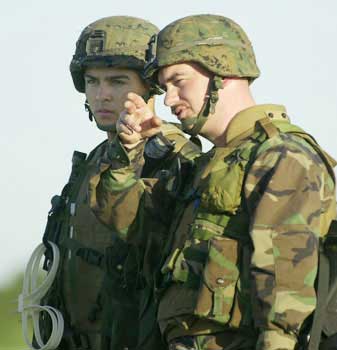
The pain of war comes home in the bodies of the men and women who are fighting it. This pain is life long and severe and is defying the usual means of treating it. It is compounded by brain injury and post-traumatic stress disorder. As a consequence lives are ruined and levels of disability, depression and substance abuse are sky-rocketing. Suicide is epidemic. What it means to me is that human beings are not meant to kill other human beings. The killers and the killed have been violated. The lucky ones may be the dead. Those who killed another, simply because they were told to may suffer the most, enduring Hell while they live - if you can call that living. War is the ultimate insanity and must be stopped.
Multi-System Pain Disorders Plague Returning Service Men and Women
Newswise — Nine in 10 Iraq and Afghanistan veterans return with some form of pain and about 60 percent have significant pain, mainly from the cumulative effect of exposure to recurring blasts which cause unimaginable injuries, according to prominent VA pain clinicians speaking at the American Pain Society’s annual scientific meeting.
“We are talking about a complicated set of problems involving cognitive issues, deep emotional impacts, and acute and chronic pain that have serious, long-term implications for our veterans and make effective pain treatment outcomes far more difficult to achieve,” said Michael E. Clark, Ph.D., clinical director of the Veteran Administration’s largest and most comprehensive pain management and rehabilitation program in Tampa, and associate professor, department of psychology, University of South Florida. “The pain constellation exhibited by returning service members is the most complex situation I have ever seen in my 30 years of practice and calls for a revolutionary new approach to simultaneously address the spectrum of shared, common symptoms across these severe disorders.”
“These Middle East conflicts, with their very high level of blast injury survivors, call for the military, the VA and the civilian health system to treat post-injury pain as a priority after military discharge to prevent pathophysiology, with a focus of providing effective pain control and rapid restoration of function and social networks to prevent disability and secondary negative health and personal consequences of chronic pain,” said Rollin M. Gallagher, M.D. MPH, deputy national program director for pain management for the VA and clinical professor of psychiatry and anesthesiology, Penn Pain Medicine, University of Pennsylvania
Dr. Clark added that the severity and breadth of the problem has been aggravated by the prevalence of multiple tours of duty for many service members, including weekend National Guardsmen who can be older with families and jobs, a situation not seen in previous U.S. conflicts.
Dr. Gallagher further noted the VA’s pain care challenge is magnified by a 90 percent injury survivor rate from these conflicts compared with only 40 percent in the Vietnam War. VA clinicians are now challenged to manage pain in blast survivors with one or several other consequences of blast, such as head injuries causing mild to severe TBI, physical disfigurement and social stigma, emotional trauma, and often post traumatic stress disorder (PTSD).
“The evidence is compelling that the symptoms of these comorbidities, as well as others such as substance abuse, depression and sleep problems, overlap significantly,” Dr. Clark explained, “and there is ample reason to believe they will not respond as favorably to traditional interdisciplinary pain treatment when compared to other groups of former soldiers.”
“The need is for a fully integrated, system-wide and evidenced-based continuum of pain management from the battlefield to military hospitals to our community care facilities with increased pain care access, state-of-the art treatment protocols, high competence levels for care providers, and the integration of pain education into professional training,” said Dr. Gallagher.
Dr. Gallagher pointed out that earlier and more aggressive acute pain treatment intervention closer to the battlefield may help to prevent or lessen longer-term disabilities and secondary consequences of chronic pain. “Present research will tell us definitely what we know from our clinical experience – that early blockage of neurological pain impulses to the spinal cord and brain close to the site of injury using peri-neural catheters and nerve blocks , along with more aggressive analgesic treatment, is proving more effective than the traditional method of just morphine injections,” he said. “And the soldiers appreciate the earlier intervention.”
VA’s Integrated Pain Care Approach
The overlapping disorders of pain, mild traumatic brain injury (TBI), and post-traumatic stress (PTSD) among returning soldiers is leading to new initiatives at the VA.
“The VHA has directed a new pain management strategy with a stepped-care model that offers a comprehensive continuum of treatment from acute pain at injury to longitudinal management of chronic pain, and this approach is now being considered by the Department of Defense in collaboration with the VHA,” Dr. Gallagher said. “The goal is to reduce pain and suffering and improve the quality of life for our returning Iraq and Afghanistan service men and women suffering acute and chronic pain.”
“The use of silo treatment pathways in chronic pain treatment is insufficient, less effective and less efficient,” Dr Clark said, “because they typically focus solely or primarily on pain-related symptoms and either exclude those with concurrent PTSD and/or TBI symptoms or occasionally refer them to relevant specialty programs for simultaneous but independent treatment.”
As an example of the VA’s health care system refocus, Dr. Clark reviewed current work at the Tampa VA facility using a single team approach and a post-deployment behavioral health program with specialties in behavioral medicine, pain, PTSD, TBI, substance abuse, physical therapy and case management.
“Our objectives are to maximize function and life adjustment, prevent symptom development or exacerbation, and reduce stress through a single team effort,” Dr. Clark said. “Treatment involves established and modified cognitive behavioral therapy interventions targeting PTSD, pain, mild TBI, sleep and substance abuse, typically in combination, and with a physical training component.
“As we extend and refine our PMD treatment components and complete more research on PMC treatment and how overlapping comorbidities interact, our hope is that this raised awareness level for integrated care within the VA will eventually be reflected in community care center treatment for our returning service personnel,” Dr. Clark summarized.
About the American Pain Society
Based in Glenview, Ill., the American Pain Society (APS) is a multidisciplinary community that brings together a diverse group of scientists, clinicians and other professionals to increase the knowledge of pain and transform public policy and clinical practice to reduce pain-related suffering. APS was founded in 1978 with 510 charter members. From the outset, the group was conceived as a multidisciplinary organization. APS has enjoyed solid growth since its early days and today has approximately 3,200 members. The Board of Directors includes physicians, nurses, psychologists, basic scientists, pharmacists, policy analysts and more.
22 January 2010
Advance Planning for US Military Haitian Disaster

Why was the US Military practicing for a Haiti Disaster Relief scenario on January 11, 2010, one day before the earthquake hit? Is that just a bizarre coincidence, or did they already know something in advance? There have been more than one report indicating that the Haiti earthquake could have been an act of man and not an act of God. What exactly is the earthquake weapon referred to by US Defense Secretary William Cohen a few years back? Who has it and did they use it in Haiti? Is that how the military knew something in advance? Did it come down the chain of command? If so, who gave the order to detonate the earthquake? Would that have been the Commander in Chief?A Haiti Disaster Relief Scenario Was Envisaged by the US Military One Day Before the Earthquake
by Michel Chossudovsky
A Haiti disaster relief scenario had been envisaged at the headquarters of US Southern Command (SOUTHCOM) in Miami one day prior to the earthquake.
The holding of pre-disaster simulations pertained to the impacts of a hurricane in Haiti. They were held on January 11. (Bob Brewin, Defense launches online system to coordinate Haiti relief efforts (1/15/10) -- GovExec.com, complete text of article is contained in Annex)
The Defense Information Systems Agency (DISA), which is under the jurisdiction of the Department of Defense (DoD), was involved in organizing these scenarios on behalf of US Southern Command.(SOUTHCOM).
Defined as a "Combat Support Agency", DISA has a mandate to provide IT and telecommunications, systems, logistics services in support of the US military. (See DISA website: Defense Information Systems Agency).
On the day prior to the earthquake, "on Monday [January 11, 2010], Jean Demay, DISA's technical manager for the agency's Transnational Information Sharing Cooperation project, happened to be at the headquarters of the U.S. Southern Command in Miami preparing for a test of the system in a scenario that involved providing relief to Haiti in the wake of a hurricane." (Bob Brewin, op cit, emphasis added)
The Transnational Information Sharing Cooperation project (TISC) is a communications-information tool which "links non-government organizations with the United States [government and military] and other nations for tracking, coordinating and organizing relief efforts".(Government IT Scrambles To Help Haiti, TECHWEB January 15, 2010).
The TISC is an essential component of the militarization of emergency relief. The US military through DISA oversees the information - communications system used by participating aid agencies. Essentially, it is a communications sharing system controlled by the US military, which is made available to approved non-governmental partner organizations. The Defense Information Systems Agency also "provides bandwidth to aid organizations involved in Haiti relief efforts."
There are no details on the nature of the tests conducted on January 11 at SOUTHCOM headquarters.
DISA's Jean Demay was in charge of coordinating the tests. There are no reports on the participants involved in the disaster relief scenarios.
One would expect, given DISA's mandate, that the tests pertained to simulating communications. logistics and information systems in the case of a major emergency relief program in Haiti.
The fundamental concept underlying DISA's Transnational Information Sharing Cooperation project (TISC) is to "Achieve Interoperability With Warfighters, Coalition Partners And NGOs" (Defense Daily, December 19, 2008)
Upon completing the tests and disaster scenarios on January 11, TISC was considered to be, in relation to Haiti, in "an advanced stage of readiness". On January 13, the day following the earthquake, SOUTHCOM took the decision to implement the TISC system, which had been rehearsed in Miami two days earlier:
"After the earthquake hit on Tuesday [January 12, 2010], Demay said SOUTHCOM decided to go live with the system. On [the following day] Wednesday [January 13, 2010], DISA opened up its All Partners Access Network, supported by the Transnational Information Sharing Cooperation project, to any organization supporting Haiti relief efforts.
The information sharing project, developed with backing from both SOUTHCOM and the Defense Department's European Command, has been in development for three years. It is designed to facilitate multilateral collaboration between federal and nongovernmental agencies.
Demay said that since DISA set up a Haiti Humanitarian Assistance and Disaster Relief Community of Interest on APAN on Wednesday [the day following the earthquake], almost 500 organizations and individuals have joined, including a range of Defense units and various nongovernmental organizations and relief groups. (Bob Brewin, Defense launches online system to coordinate Haiti relief efforts (1/15/10) -- GovExec.com emphasis added)
DISA has a Southern Command (SOUTHCOM) Field Office in Miami. Under the Haiti Disaster Emergency Program initiated on January 12, DISA's mandate is described as part of a carefully planned military operation:
"DISA is providing US Southern Command with information capabilities which will support our nation in quickly responding to the critical situation in Haiti," said Larry K. Huffman, DISA's Principal Director of Global Information Grid Operations. "Our experience in providing support to contingency operations around the world postures us to be responsive in meeting USSOUTHCOM's requirements." DISA, a Combat Support Agency, engineers and [sic] provides command and control capabilities and enterprise infrastructure to continuously operate and assure a global net-centric enterprise in direct support to joint warfighters, National level leaders, and other mission and coalition partners across the full spectrum of operations. As DoD's satellite communications leader, DISA is using the Defense Satellite Communications System to provide frequency and bandwidth support to all organizations in the Haitian relief effort. This includes Super High Frequency missions that are providing bandwidth for US Navy ships and one Marine Expeditionary Unit that will arrive shortly on station to provide medical help, security, and helicopters among other support. This also includes all satellite communications for the US Air Force handling round-the-clock air traffic control and air freight operations at the extremely busy Port-Au-Prince Airport. DISA is also providing military Ultra High Frequency channels and contracting for additional commercial SATCOM missions that greatly increase this capability for relief efforts. (DISA -Press Release, January 2010, undated, emphasis added)
In the immediate wake of the earthquake, DISA played a key supportive role to SOUTHCOM, which was designated by the Obama administration as the de facto "lead agency" in the US Haitian relief program. The underlying system consists in integrating civilian aid agencies into the orbit of an advanced communications information system controlled by the US military.
"DISA is also leveraging a new technology in Haiti that is already linking NGOs, other nations and US forces together to track, coordinate and better organize relief efforts" (Ibid)
Related articleThe Militarization of Emergency Aid to Haiti: Is it a Humanitarian Operation or an Invasion?
- by Michel Chossudovsky - 2010-01-15