02 February 2012

Computer Program Can Read Your Mind


Having trouble tuning in to your friend's thoughts? Don't worry the problem has been solved with a computer program that can read thoughts and transcribe them! Throw your voice recognition soft-ware away- now you don't even have to say the words- just think them!


Mind-reading program translates brain activity into words

The research paves the way for brain implants that would translate the thoughts of people who have lost power of speech
Algorithms translated the brain activity associated with hearing 'Waldo', 'structure', 'doubt' and 'property' into recognisable words. Video: PLoS Biology Link to this video
Scientists have picked up fragments of people's thoughts by decoding the brain activity caused by words that they hear.
The remarkable feat has given researchers fresh insight into how the brain processes language, and raises the tantalising prospect of devices that can return speech to the speechless.
Though in its infancy, the work paves the way for brain implants that could monitor a person's thoughts and speak words and sentences as they imagine them.
Such devices could transform the lives of thousands of people who lose the ability to speak as a result of a stroke or other medical conditions.
Experiments on 15 patients in the US showed that a computer could decipher their brain activity and play back words they heard, though at times the words were difficult to recognise.
"This is exciting in terms of the basic science of how the brain decodes what we hear," said Robert Knight, a senior member of the team and director of the Helen Wills Neuroscience Institute at the University of California, Berkeley.
"Potentially, the technique could be used to develop an implantable prosthetic device to aid speaking, and for some patients that would be wonderful. The next step is to test whether we can decode a word when a person imagines it. That might sound spooky, but this could really help patients. Perhaps in 10 years it will be as common as grandmother getting a new hip," Knight said. The study is published in the journalPLoS Biology.
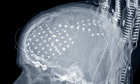
The scientists ran tests on patients who were already in hospital for an operation to treat intractable epilepsy. In that procedure, patients have the top of their skull removed and a net of electrodes laid across the surface of their brain. Doctors use the electrodes to identify the precise trigger point of the patient's fit, before removing the tissue. Sometimes, patients wait for days before they have enough seizures to locate the source of the problem.
Scientist Brian Pasley enrolled 15 patients to take part. He played each a series of words for five to 10 minutes while recording their brain activity from the electrode nets. He then created computer programs that could recognise sounds encoded in the brain waves.
The brain seems to break sounds down into their constituent acoustic frequencies. The most important range for speech is 1-8,000 Hertz.
Pasley compared the technique to a pianist who can hear a piece in their mind just by knowing which keys are played.
He next played a collection of new words to the patients to see if the algorithms could pick out and repeat recognisable words. Among them were words such as "Waldo", "structure", "doubt" and "property".
The scientists got their best results when they recorded activity in the superior temporal gyrus, part of the brain that sits to one side, above the ear.
"I didn't think it could possibly work, but Brian did it," said Knight. "His model can reproduce the sound the patient heard and you can actually recognise the word, though not at a perfect level."
The prospect of reading minds has led to ethical concerns that the technology could be used covertly or to interrogate criminals and terrorists.
Knight said that is in the realm of science fiction. "To reproduce what we did, you would have to open up someone's skull and they would have to co-operate." Making a device to help people speak will not be easy. Brain signals that encode imagined words could be harder to decipher and the device must be small and operate wirelessly. Another potential headache is distinguishing between words a person wants to say and thoughts they would rather keep private.
Jan Schnupp, professor of neuroscience at Oxford University called the work "remarkable".
"Neuroscientists have long believed that the brain works by translating aspects of the external world, such as spoken words, into patterns of electrical activity. But proving that this is true by showing that it is possible to translate these activity patterns back into the original sound – or at least a fair approximation – is nevertheless a great step forward. It paves the way to rapid progress toward biomedical applications," he said.
"Some may worry though that this sort of technology might lead to mind-reading devices which could one day be used to eavesdrop on the privacy of our thoughts. Such worries are unjustified. It is worth remembering that these scientists could only get their technique to work because epileptic patients had cooperated closely and willingly with them, and allowed a large array of electrodes to be placed directly on the surface of their brains.
"We can rest assured that our skulls will remain an impenetrable barrier for any would-be technological mind hacker for any foreseeable future," he added.

30 January 2012

Why All 'Cholesterol Drugs' Are Very Dangerous


pillstatin
While annual sales of statin drugs have reached $29 billion a year, globally, new concerns are being raised by a broad range of health and consumer advocacy organizations around the world regarding the growing body of clinical research indicating they may be causing far greater harm than good.
Despite the success of statin drugs for lowering cholesterol, over 300 health problems have been linked to this chemical class of drugs in peer-reviewed clinical research found on the National Library of Medicine. 
GreenMedInfo.com, a biomedical research site, is offering a 63 page PDF for free and unlimited download, as part of a broad-based awareness campaign dedicated to informing consumers and health care practitioners alike of the danger represented by the indiscriminate and excessive use of this type of drug.
Natural Society, which has garnished a global following due to its hard-hitting investigative pieces into the role corporations play in adversely affecting environmental and human health, is spear-heading the dissemination of this message, and openly invites other organizations to join the cause.
The medical ethical principle of informed consent requires that patients be told the risks and benefits associated with their treatment. Until there is full awareness among the millions of statin users in this country, and abroad, that these drugs may be contributing to muscle damage, nerve damage, cancer, diabetes, and hundreds of other adverse health conditions, we believe the burden of proving them safe should be on the companies producing these products, as well as the regulatory agencies approving them for use, instead of the population being given them.
To become involved, copy and repost this release. Additional and/or media inquires:info@greenmedinfo.com, contact@naturalsociety.com
 

Cell Phones and Brains Don't Mix


Your Brain or Your Cell Phone- You must choose
NaturalSociety
January 27, 2012
satelitewaves 210x131 Cell Phones, EMF Negatively Altering Important Regions of the BrainA new Greek scientific study has demonstrated how frequency electromagnetic fields, namely cell phones, portable phones, WiFi, and wireless computer equipment, alter important protein changes in the brains of animals. Exposure to electromagnetic frequencies is the result of our advancing technologies, but it is important to study these effects so people know exactly what they’re dealing with in order to take the necessary precautionary measures.

Cell Phones, EMF Negatively Altering Important Regions of the Brain

The study, entitled “Brain proteome response following whole body exposure of mice to mobile phone or wireless DECT base radiation,” was published in the journal Electromagnetic Biology and Medicine. Important areas of the brain such as the hippocampus, cerebellum, and frontal lobe are regions responsible for learning, memory, and other functions. These areas are negatively impacted by microwave radiation, even at levels below the safety guidelines put in place by the International Commission on Non-Ionizing Radiation protection.
Researchers found that 143 proteins in the brain were negatively impacted by radio frequency radiation over a period of 8 months. A total of 3 hours of cell phone exposure were simulated over the 8 month time period, and the results showed that many neural function related proteins’ functional relationship changed the for worse.
It is known that short term exposure of microwaves exuded from a cell phone, depending on how far the antenna is from the head, can penetrate as much as 1 1/2 inches into the brain, but this study focuses more on the long term effects and how EMF impacts specific brain proteins. This provides new evidence of the potential relationship between EMF and health complications stemming from EMF such as headaches, dizziness, sleep disorders, and even tumors and Alzheimer’s disease.
Another study conducted by a Russian team of researchers also showed that EMF and cell phones cause significant long-term cognitive decline in children. It may be time for parents to re-determine if young children should really be using these devices with growing bodies and developing brains.
A number of foreign countries are attempting to adopt precautionary protocols to limit cell phone use in an attempt to mitigate the number of adverse effects they have on human health. In 2011, the WHO/IARC released a report stating that cell phone radiation may have a carcinogenic effect on humans. In fact, the World Health Organization actually said that cell phones are in the same cancer-causing category as lead, engine exhaust, and chloroform.
Explore More:
  1. Cell Phones, Brain Tumors and a Wired Earpiece
  2. How Cell Phones are Causing Health Complications, Protect Yourself
  3. These Cell Phones Can Emit 28 Times More Radiation
  4. Mobile Phones Cause ‘Five-Fold Increase in Brain Cancer Risk’
  5. Cell Phone Cancer Concerns: What Else Is a Danger in Your Home?
  6. WHO Says this Common Device is in the Same Category as Lead, Engine Exhaust, and Chloroform

The Dangers of Artificial Joint Replacements


The pain of arthritis in the hips and knees has led many to accept artificial joints as a solution. Now, studies indicate that they are not safe. The artificial hips introduce minute amounts of foreign material into the body that causes severe health problems- the poisoning effects on heart, lung, and muscles, not to mention the general toxicity to the body. Not only that, but the overall failure rate of the devices can be as high as 50% in just 6 years! These facts are not often disclosed to patients ahead of time. They only find out later when its too late. While it is possible to rebuild arthritic joints with very specific nutriton, the process is slow. It is better to avoid the development of joint disease through proper nutrition as a life-long practice.

Health warning over hip implants

Tens of thousands of patients who received hip replacements are at the centre of a major health alert over concerns they are poisoning their bodies.

Health warning over hip implants
Metal-on-metal implants were introduced in the UK in the 1990s when they were promoted as offering better mobility than replacements which use a metal ball and plastic socket 
Medical regulators are drawing up new advice for more than 30,000 Britons who have received “metal-on-metal” devices because of fears that they are even more dangerous than previously thought, a Sunday Telegraph investigation has found.
Problems occur with such devices when friction between the metal ball and cup causes minuscule metal filings to break off, which can seep into the blood and cause inflammation, destroying muscle and bone.
There are also concerns that the fragments could put the nervous system, heart and lungs at risk of being slowly poisoned.
The problems have been found to affect people of all ages but studies have found young and petite women are particularly at risk.
Patients with this type of hip replacement are already supposed to undergo annual checks, with scans and blood tests if doctors find symptoms that suggest metal leakage.
Advisers to the Medicines and Healthcare products Regulatory Agency (MHRA) have decided the advice should go further due to concerns that the devices could cause “systemic toxicity” in the body.
The move comes as an investigation found:
  • Newly obtained research shows some hip replacements, which were withdrawn from the UK market in 2010, have far higher failure rates than had been known — of up to 50 per cent within six years.
  • Warnings from senior surgeons that although all patients given two specific implants should have been checked for metal leaks, not all have been contacted.
  • Nine legal firms are preparing compensation claims for 1,136 patients who suffered as a result of the two substandard devices.
A report from a conference of senior surgeons, held behind closed doors, describes the situation regarding all metal-on-metal hip replacements as “frightening” given the number of patients now suffering tissue reactions amid “component failure of catastrophic proportions”.
Metal-on-metal implants were introduced in the UK in the 1990s when they were promoted as offering better mobility than replacements which use a metal ball and plastic socket. They were seen as a better option for younger patients, who were likely to be more active and put more pressure on the joint.
In total, more than 40,000 patients in Britain have had them implanted. They include 10,000 who received two types of implants made by DePuy, a subsidiary of the health giant Johnson & Johnson, which were taken off the market in September 2010 because of declared “failure rates” of 12 to 13 per cent at five years.
More than 5,500 were given full hip replacements, with the rest given partial “resurfacing” operations with the devices. Now, a report on more than 500 patients, presented to the British Hip Society and seen by The Sunday Telegraph, has found failure rates of up to 50 per cent at six years for those given the full hip replacement.
Even among those given the more limited resurfacing treatment, one in four products failed within the same period, according to the study by surgeons in the North East.
Experts have not established why the DePuy models have such a high failure rate. In September 2010, the MHRA said orthopaedic surgeons should contact every patient given either a DePuy ASR or DePuy ASR XL model, to ensure they were monitored.
Any patients suffering abnormal pain or deteriorating hip function should have been offered tests to establish the levels of cobalt and chromium in their blood, and MRI or ultrasound scans to check for soft tissue reactions. If problems were found the device should be replaced, the alert said.
However, The Sunday Telegraph can disclose that the British Orthopaedic Assocation (BOA) has written to surgeons, expressing fears that not all patients who received the DePuy devices have been recalled for checks.
The letter, sent this month, says that records held by DePuy show that just over one third of patients who received the devices are recorded as having been recalled.
Professor Joe Dias, president of the BOA, said he understood that just 41 per cent of patients who received the implants were registered on this system.
He said it was possible that others had been recalled by hospitals, and undergone checks, without their details being centrally logged but that he was concerned that some had never been contacted.
The surgeon said that while private hospitals and large NHS units seemed to have been thorough in contacting patients, it was less clear whether small NHS units had done the same.
“My worry would be about cases where surgeons have retired, and no-one is following up on the patients they treated,” he said.
The implants’ manufacturers cannot contact patients directly, because they do not have access to their records.
In 2010, months before the DePuy recall, all 40,000 patients with metal-on-metal implants were told that they should undergo checks annually for at least five years.
The MHRA would not say when it would issue the new alert, or what it would say.
Stephen Cannon, a consultant orthopaedic surgeon for the Royal National Orthopaedic Hospital, said the type of damage caused by metal leakage could make replacement operations more difficult.
There was also concern that increased cobalt and chromium levels in the blood could be toxic to kidneys and, in the case of pregnant women, be passed on to the unborn child.
Experts expressed alarm that many people could remain unwittingly at risk from the products.
Peter Walsh from the patient safety charity Action against Medical Accidents said: “It is outrageous that this has been allowed to happen and that patients who are at risk from these products have not been warned.”
He said the system of regulation for medical devices required a radical shake-up, with the disclosures about the safety of hip replacements following the fiasco in which thousands of women received potentially dangerous PIP breast implants made of industrial silicone.
Massive legal action is now under way over the DePuy claims with 1,136 already represented by lawyers. Some individual compensation claims are likely reach six figures to take account for loss of earnings from patients facing repeated operations and disability, lawyers said.
A spokesman for DePuy said the company was working to provide patients with information and support. He said the company had no comment on how many patients who should have been recalled were logged by their system.
The study showing a 50 per cent failure rate was based on findings by one surgeon, and was not in line with the latest national figures, which had found a five-year revision rate of 17 per cent for the full hip replacement, he added.